
 EN
EN



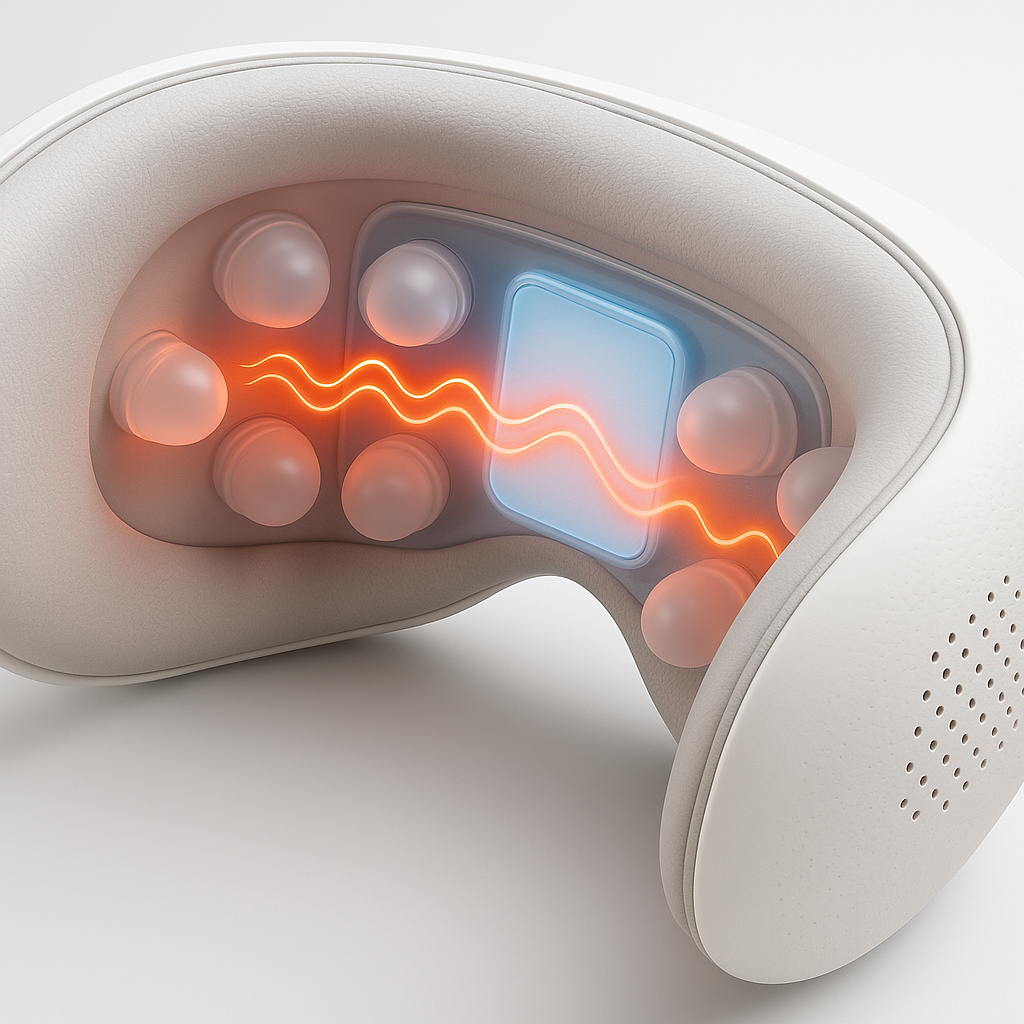
Core Battery Life Optimization Strategies for Portable Massagers
Key Drivers of Power Consumption in Portable Massagers
Most portable massagers consume their electricity mainly from the motor running around 58% of the time, while control systems take another 23%, and those little background leaks in circuits account for about 19% according to some research from Ponemon back in 2023. How hard these things vibrate makes a big difference on how long they last between charges. When someone cranks up the vibrations to maximum, it can cut down battery life almost two thirds compared to when it's set to gentle mode. Compact design also creates problems with heat buildup inside these devices. Because there isn't enough space for proper cooling, roughly 12% gets lost just trying to manage all that generated heat.
Efficient Motor Selection and Duty Cycle Control
Brushless DC motors with rare-earth magnets achieve 92% efficiency, outperforming brushed motors at 78%. Implementing dynamic duty cycling—45 seconds of operation followed by 15-second pauses—extends runtime by 32 minutes per charge in clinical testing. Pulse-width modulation (PWM) controllers further enhance efficiency by reducing energy waste during speed transitions by 41%.
Circuit Design Techniques to Minimize Energy Leakage
SMD components cut down on parasitic capacitance quite a bit actually around 29% reduction. And when it comes to microcontrollers, the ARM Cortex-M0+ series really stands out because they keep their quiescent current at just 8 microamps. That's pretty impressive for something so small. When talking about power management, optimized distribution networks make a real difference too. They help save between 18 to 22 percent of what would otherwise be lost in lithium ion systems. Looking at recent improvements, we've seen some exciting developments. Switched mode power supplies now hit nearly 95% efficiency which is remarkable. There are also these new graphene based super capacitors that stabilize loads better than traditional options. And don't forget about adaptive impedance matching techniques in charging circuits that adjust automatically based on conditions. All these innovations together are changing how we think about power consumption in electronic devices.
Energy-Efficient Mechanical and Structural Design
Tungsten-carbide bearings in massager heads cut friction losses by 39% versus steel. Aerogel-insulated ergonomic handles maintain optimal operating temperatures (25—35°C), protecting battery performance. Finite element analysis (FEA)-driven topology optimization reduces weight by 17% without sacrificing durability, improving energy-per-gram efficiency.
Adaptive Power Modes and Usage-Based Energy Conservation
Smart systems using MEMS accelerometers detect inactivity and switch to standby within 8 seconds, conserving 23% of battery capacity under typical use. Maintaining lithium-ion batteries between 20—80% state of charge (SoC) extends cycle life by 2.4× compared to full discharges. Real-world testing confirms adaptive algorithms extend service life by 18 months in daily-use scenarios.
Lithium-Ion Battery Selection and Energy Density Optimization
Designing portable massagers with optimal battery life requires strategic lithium-ion chemistry selection and energy density optimization. By balancing electrochemical properties with device constraints, engineers can achieve extended runtime without compromising safety or portability.
Comparative Analysis of Lithium-Ion Chemistries for Portable Massagers
For portable massagers, lithium iron phosphate (LFP) and nickel manganese cobalt (NMC) battery chemistries work really well because they strike a good balance between energy density around 150 to 220 Wh per kg and maintain solid thermal stability. Lithium cobalt oxide (LCO) batteries do pack more power at about 240 to 270 Wh per kg, but they have serious issues with heat resistance which can create safety problems when used in devices that vibrate a lot during operation. Testing has shown that LFP batteries stay intact even when temperatures reach 60 degrees Celsius, so these types tend to be preferred for deeper tissue massage applications where the device gets worked hard over extended periods without overheating concerns.
Balancing Energy Density, Size, and Safety in Compact Designs
Anodes made mostly from silicon can actually increase energy density somewhere around 30 to 40 percent, though they tend to produce quite a bit more heat which makes managing temperature tricky in small handheld gadgets. According to some research coming out in 2025, when using NMC cells that are about 4 millimeters thick, users get roughly eight hours of runtime. However these same cells need nearly 35 percent extra space for cooling compared to their thinner LFP counterparts. There's also this thing called folded electrode designs that seems to strike a decent balance between performance and practicality. These setups manage to fit about 15 to maybe even 20 percent more active material inside without letting things get too hot operationally speaking, staying below forty degrees Celsius during those short twenty minute usage periods most people experience day to day.
Early Integration of Battery Specifications into Product Design
Getting battery dimensions and weight sorted out early in the CAD modeling process can actually shrink the overall chassis size by somewhere around 18 to 25 percent when compared to making those changes later on. The design also makes it possible to create better gripping surfaces while maintaining at least 300 mAh per cubic centimeter capacity, which is really important for those handheld massagers that need to power 10,000 RPM motors. When electrical engineers work closely with mechanical designers from day one, we avoid problems like handles that end up too big or batteries that only last about 800 charge cycles instead of the standard 2,000 that most people expect these days.
Impact of Environmental Conditions on Battery Performance
Massagers used in saunas or cold recovery chambers experience 15—20% faster annual capacity loss due to temperature extremes. Testing shows LFP cells degrade 2.3x faster under 90°F/90% RH conditions compared to climate-controlled environments. Smart thermal buffers and moisture-wicking casings help maintain ≥80% capacity over 500 full charge cycles across diverse climates.
Smart Battery Management Systems (BMS) for Long-Term Reliability
Advanced BMS platforms monitor cell voltage differentials (±5 mV accuracy) and ambient temperature (0—45°C range) to optimize performance. A 5°C rise during operation increases internal resistance by 12%, accelerating degradation. Real-time analytics allow dynamic adjustments to motor loads and charging rates, cutting energy waste by up to 18% versus basic monitoring.
Intelligent Charging Algorithms to Preserve Battery Health
Adaptive charging protocols adjust current based on state-of-charge (SoC) and usage history. Multi-stage CC-CV charging with tapered current reduces lithium plating risk by 23%. Machine learning models analyze 90-day patterns to predict optimal charge termination, enabling 800+ cycles with 80% capacity retention.
Avoiding Overcharging with Precision Cut-Off and Charge Control
Overcharging causes 34% of premature battery failures. Precision cut-off circuits (±0.5% tolerance) disconnect at 4.2V/cell, while dual-method SOC estimation—using coulomb counting and Kalman filtering—achieves 99.5% accuracy. Field data show these methods limit capacity fade to ≥2% per 100 cycles, compared to 5% in unmanaged systems.
Partial Charging Benefits vs. Full-Cycle Charging Myths
Lithium-ion batteries last longest when charged between 20—80% SoC rather than fully cycled. Research shows 1,200+ cycles at 50% depth-of-discharge (DOD), versus just 500 at 100% DOD. Adaptive BMS settings automatically cap charging at user-defined thresholds while maintaining accurate runtime predictions via impedance spectroscopy.
Thermal Management and Longevity in Portable Massager Batteries
Heat Generation Challenges in Compact Lithium-Ion Packs
During 30-minute sessions, lithium-ion cells generate 18—22W of heat from ohmic and entropic losses, creating up to 15°C temperature gradients across tightly packed modules. These conditions accelerate electrolyte decomposition by 40% compared to well-cooled systems (Journal of Power Sources 2023).
Passive and Active Cooling Solutions for Wearable Devices
Phase change materials (PCM) absorb 250—300 J/g during phase transition, adding only 2—3mm to device thickness. A 2023 study found PCM-integrated packs keep surface temperatures below 45°C during continuous use, outperforming aluminum heat sinks by 60%. Active micro-pump liquid cooling improves thermal uniformity by 85% but demands careful power allocation.
Thermal Impact on Charging Efficiency and Battery Lifespan
Every 10°C above 25°C doubles lithium-ion degradation, potentially shortening lifespan from 800 to 500 cycles. Intelligent thermal management adjusts charge current in real time, preserving 92% of initial capacity after two years—versus 68% in unregulated devices. Optimal charging occurs between 15—35°C, where 3C fast-charging is feasible without safety compromise.