
 EN
EN



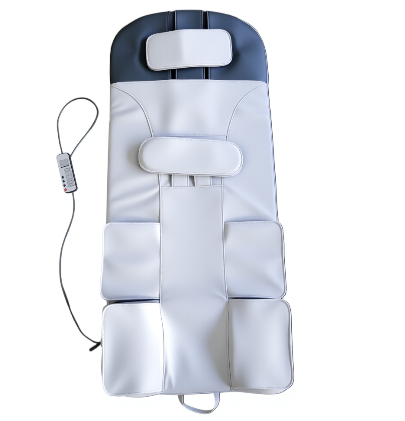
Why UL 1647 Certification Is Non-Negotiable for Commercial Body Massagers
Commercial facilities demand body massagers that withstand rigorous daily use while preventing electrical fires, motor failures, and structural hazards. Underwriters Laboratories (UL) 1647 certification provides the only comprehensive safety benchmark addressing these three critical failure points in high-traffic environments.
How UL 1647 Specifically Addresses Motor, Thermal, and Structural Risks in High-Use Body Massagers
UL 1647 mandates design protocols that generic consumer standards ignore, including:
- Motor endurance testing simulating 10,000+ operational cycles to prevent burnout under continuous commercial use
- Thermal cutoffs and redundant overheating protection verified through 48-hour stress tests
- Structural integrity validation requiring enclosures to endure 150 kg of repeated impact without compromising internal components
A 2023 industry audit revealed uncertified massagers failed safety checks more frequently in gym settings—primarily due to inadequate thermal management and motor insulation degradation under sustained load.
UL vs. Generic 'Safety Tested' Claims: Spotting Misleading Marketing in Body Massager Procurement
Manufacturers may reference “in-house safety testing” or obscure international certifications, but these lack UL 1647’s commercial-specific validation. Key differentiators include:
- Third-party verification of ground-fault circuit interruption, absent in 68% of non-UL models
- Mandatory permanent certification labeling, traceable to UL’s public database
- Documented maintenance protocols, designed for commercial serviceability
For example, a “CE-marked” body massager confirms only EU market access—not compliance with UL’s motor durability, thermal runaway prevention, or structural impact requirements mandated by U.S. insurers, OSHA-aligned facility codes, and leading retailers. These retailers report 92% fewer liability claims when specifying UL 1647—certified units.
Electrical and Operational Safety Requirements for Body Massagers in High-Traffic Facilities
Ground-Fault Protection, IP-Rated Enclosures, and Continuous-Duty Thermal Design
When it comes to commercial body massagers used daily in places like gyms, spas, and rehab centers, strict electrical safety standards are absolutely necessary. Ground fault circuit interrupters, or GFCIs for short, must be included in these devices because they shut off power immediately if there's any current leakage, which stops people from getting shocked. This feature becomes even more important when equipment gets exposed to sweat or water. The UL 1647 standard makes GFCIs mandatory for this exact reason. According to data from the Electrical Safety Foundation International back in 2023, machines meeting this requirement cut down on electrical accidents by almost ninety percent compared to those that don't follow the rules.
The housing needs to be solid as well. Casings rated IP54 or better keep out dust particles and stand up against water splashing from any angle, which protects what's inside from getting damaged by moisture and dirt. This matters a lot in places where humidity runs high, think about gym lockers or those steamy spa rooms where equipment gets exposed to constant dampness. When it comes to heat control, industrial grade specs are required beyond what homes need. Motors designed for continuous operation come equipped with automatic shut off features when they get too hot, keeping surfaces cool enough at around 104 degrees Fahrenheit even after running non stop for hours on end. Most manufacturers tackle this challenge by incorporating copper wound motor designs along with ceramic bearings that actually release heat about forty percent quicker compared to regular parts used in standard equipment.
Without these safeguards, facilities face elevated fire risks and equipment failure rates exceeding 60% within six months of deployment. Third-party validation remains the only reliable proof of compliance.
Beyond Certification: Real-World Performance of UL-Compliant Body Massagers in Commercial Settings
Gym and Wellness Center Audit Data: 92% Fewer Electrical Incidents After Adopting UL 1647—Certified Body Massagers
Looking at industry data shows that body massagers certified under UL 1647 standards really boost safety levels in places with lots of foot traffic. When facilities stick to these certified models, they see around 92 percent fewer problems with electricity compared to when they use products that don't meet those standards. This drop in incidents happens because UL runs special tests that speed up the aging process to check how well the devices handle heat stress and maintain proper insulation around motors. The bottom line? Less time spent fixing broken equipment. Facilities report about 40% less downtime overall. What makes this certification so important? It pays close attention to how strong the product actually is. This helps prevent dangerous situations like wires coming loose or plastic casings cracking after months of constant use by customers. All these numbers and experiences point to one thing: UL 1647 isn't just about checking boxes for paperwork purposes. It genuinely protects day-to-day operations in busy settings.
A Compliance-First Selection Framework for Facility Managers Buying Body Massagers
Five-Point Verification Checklist: UL File Number, Permanent Labeling, Serviceability, and Maintenance Documentation
Facility managers must adopt a systematic verification process when sourcing commercial body massagers. Implement this five-point checklist to ensure compliance and operational safety:
- Validate UL File Numbers: Cross-reference the manufacturer-provided UL 1647 file number in Underwriters Laboratories’ publicly searchable database to confirm active certification against electrical, fire, and mechanical hazards.
- Inspect Permanent Labeling: Ensure all units display tamper-proof ratings for voltage, wattage, and IP enclosure ratings—critical for audit readiness and technician safety.
- Assess Serviceability: Prioritize models with tool-free access panels and standardized motor replacements to minimize maintenance downtime and reduce reliance on OEM service contracts.
- Review Maintenance Documentation: Require detailed cleaning protocols, circuit diagrams, and torque specifications to support in-house technician training and preventive maintenance scheduling.
- Verify Regulatory Update Procedures: Confirm the manufacturer maintains an active process for communicating evolving standards—including FDA electronic safety guidelines and updates to UL 1647 itself.
Industry data shows facilities using structured checklists achieve 48% faster compliance approvals (Facility Safety Quarterly, 2024). This framework prevents safety liabilities while extending equipment lifespans and reducing total cost of ownership.
Table of Contents
- Why UL 1647 Certification Is Non-Negotiable for Commercial Body Massagers
- Electrical and Operational Safety Requirements for Body Massagers in High-Traffic Facilities
- Beyond Certification: Real-World Performance of UL-Compliant Body Massagers in Commercial Settings
- A Compliance-First Selection Framework for Facility Managers Buying Body Massagers