
 EN
EN



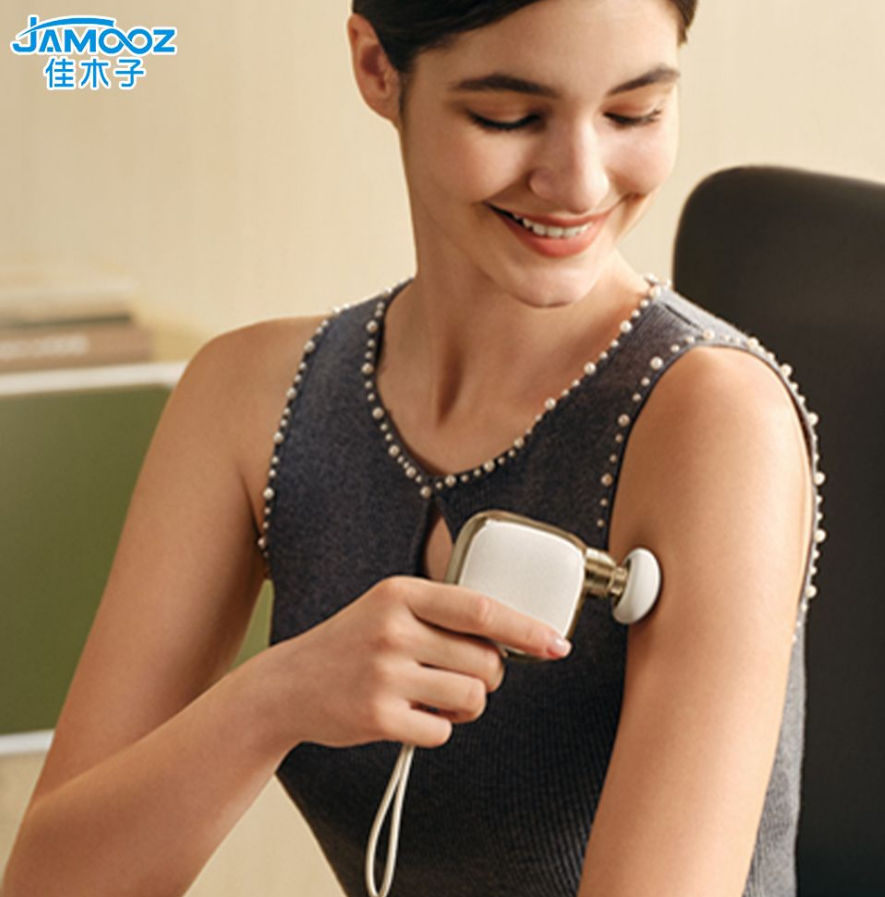
Mini Massager Types: Percussion, Vibration, and Shiatsu Explained
Percussion Mini Massagers: Deep-Tissue Relief in a Compact Form
Percussion mini massagers send quick, focused pulses (usually around 2000 to 3200 per minute) straight into those deep muscle layers where tension builds up. What makes these devices special is how they work similarly to what physical therapists do during myofascial release sessions, helping to loosen those stubborn knots we all get in our shoulders, backsides, and legs after long days at work or the gym. The newer compact versions manage to keep that important 8 to 12mm depth while still staying light enough at under half a kilogram. That means people can move them easily from spot to spot without losing effectiveness. These massagers also pack serious punch with their stall force reaching over 10 kilograms, so users don't have to worry about losing power when digging into particularly tight spots. Research published last year in the Journal of Sports Medicine showed that using percussion therapy boosts blood flow in muscles after workouts by about three quarters, which helps both professional athletes and office workers recover quicker from soreness and fatigue.
Vibration and Shiatsu Mini Massagers: Gentle Alternatives for Daily Recovery
Mini massagers that vibrate typically run between 30 and 50 Hz, creating gentle oscillations that work well for joints feeling stiff, improving blood flow, and helping people unwind after a long day or during short breaks from work. The shiatsu type features rotating nodes that mimic finger pressure along those traditional energy paths we all hear about. A study in Physiotherapy Research International last year showed office workers who used these regularly experienced around 40% less neck pain over time. Neither option goes for maximum power but instead focuses on steady, comfortable relief. Most models come with adjustable intensity levels and stay remarkably quiet below 50 decibels, which makes them great for using secretly at a desk, while traveling on airplanes, or anywhere else where noise might be an issue. Vibration massage helps larger areas of muscles, whereas the acupressure points targeted by shiatsu stimulate different parts of our nervous system, so they actually complement each other pretty well when it comes to getting some daily recovery done without spending hours at a spa.
Critical Performance Metrics for a High-Functioning Mini Massager
RPM/PPM, Amplitude, and Stall Force: What Actually Impacts Effectiveness
Three core metrics determine whether a mini massager delivers meaningful, repeatable relief: RPM/PPM, amplitude, and stall force.
- RPM/PPM measures head speed—commonly ranging from 1,800 to 3,200—but clinical value lies not in peak speed, but in adjustable, personalized intensity ranges that match muscle group density and recovery phase.
- Amplitude, measured in millimeters, reflects how deeply the device penetrates tissue. While full-sized units achieve 12–16mm, top-tier mini massagers now match 12mm—enabling true deep-tissue engagement despite compact form. Deeper amplitude directly enhances myofascial release efficacy for persistent knots.
- Stall force, expressed in kilograms (or pounds), indicates how much sustained pressure the motor can handle before slowing or stopping. Premium mini devices sustain ≥10kg (22lbs), ensuring uninterrupted performance when working dense tissues like quadriceps or upper trapezius. Per 2024 kinesiology research, higher stall force reduces treatment interruptions by 47%.
| Metric | Definition | Ideal Range | Impact |
|---|---|---|---|
| RPM/PPM | Head movement speed | 1,800–3,200 (adjustable) | Enables tailored intensity across muscle groups |
| Amplitude | Depth of tissue penetration | ≥12mm | Delivers clinically relevant myofascial release |
| Stall Force | Pressure resilience | ≥10kg (22lbs) | Maintains consistent output under firm application |
Balancing all three—not just chasing max specs—ensures adaptive, clinic-caliber results in a truly portable package.
Design & Usability: Weight, Ergonomics, and Portability for Real-Life Use
Why Sub-500g Weight and Contoured Grip Matter for Travel and Office Use
Massagers weighing under 500 grams offer something beyond mere convenience they're practically necessary these days. When someone's trying to work out kinks in their neck while stuck on a long flight or needs relief from muscle tension after several consecutive business meetings, a lightweight device makes all the difference. The right model comes with a grip that stays put in hand, letting users target those tricky areas like the upper back muscles or along the IT band without twisting wrists into uncomfortable positions. What really matters though is how these compact devices actually work in practice. They slip easily into laptop bags or overhead compartments, and because they balance so well in hand, people can give themselves a quick massage almost anywhere without drawing attention. Whether it's during a presentation break or late at night in an unfamiliar hotel room, the combination of size and functionality turns what might seem like a luxury item into something genuinely useful for daily life.
Battery Life, Attachments, and Smart Features That Extend Mini Massager Utility
Lithium-Ion Batteries vs. Runtime Trade-offs: Getting 90+ Minutes Without Bulk
Lithium ion batteries are still king when it comes to mini massagers because they pack so much power into such small packages. The best ones can last anywhere from 90 to 120 minutes straight after just one charge, which means people can use them several times during the day without needing to stop and recharge. Getting all this performance out of something so tiny isn't easy though. Engineers have to balance how big the battery needs to be versus how heavy the whole thing gets. Most top quality models stay under 500 grams while still giving at least 90 minutes of runtime as tested. Charging usually takes between 1.5 and 3 hours these days, but many newer models come with fast charging options that cut down waiting time quite a bit. And let's not forget about those battery indicators either. They're really important for planning massage sessions, particularly for folks who need relief throughout their workday or long travel periods.
Essential Attachments—Ball, Fork, Bullet—and When Each Mini Massager Head Delivers Value
Interchangeable attachments unlock true versatility. Each head serves a distinct anatomical and therapeutic purpose:
- The ball head offers broad, rounded pressure—ideal for large, fleshy areas like quads, glutes, and lats—distributing force comfortably across surface tissue.
- The fork head (U-shaped) safely straddles bony structures, allowing targeted work around the spine, cervical vertebrae, Achilles tendon, or forearms without direct pressure on sensitive anatomy.
- The bullet head (cone-shaped) concentrates force for deep, localized trigger point release—especially effective on shoulders, plantar fascia, hands, and hip flexors.
Many massage kits come with different heads attached. There's usually a flat one good for general muscle pounding, plus something softer called a dampener that works better on tender spots such as around the neck area or along the ribs where people often get sore. When shopping around, look for compact models that have all three basic attachments because this makes them versatile enough to handle various kinds of recovery needs. Think about times when someone might need relief after running hard, trying to fix bad sitting habits during work hours, or dealing with nagging pains while traveling between meetings.
FAQ
What is the main difference between percussion and vibration mini massagers?
Percussion mini massagers deliver quick, targeted pulses for deep-tissue relief, while vibration massagers provide gentle oscillations for general relaxation and stiffness relief.
How does amplitude affect the effectiveness of a mini massager?
Amplitude determines how deeply a massager penetrates the tissue; higher amplitude facilitates more effective myofascial release, crucial for addressing persistent muscle knots.
Why are attachments important for mini massagers?
Attachments optimize the massager's versatility, with each head type catering to specific muscle groups or therapeutic needs, offering tailored relief for varied scenarios.